
Build a compact riverside town with jobs in housing range and food and drink after every shift. Start in Story Mode, where the pacing and optional tutorial helpers introduce the systems as you go. Get that first pocket working before you stretch your workers across a larger city.
What should you build first in Beyond These Stars?
Start with a small, balanced settlement on the habitable ground beside the water, keeping homes, workplaces, and everyday needs close together. Long walks make shifts less efficient and can leave Peeps short of nutrition or recreation. A compact pocket is easier to keep supplied than separate housing and production districts.
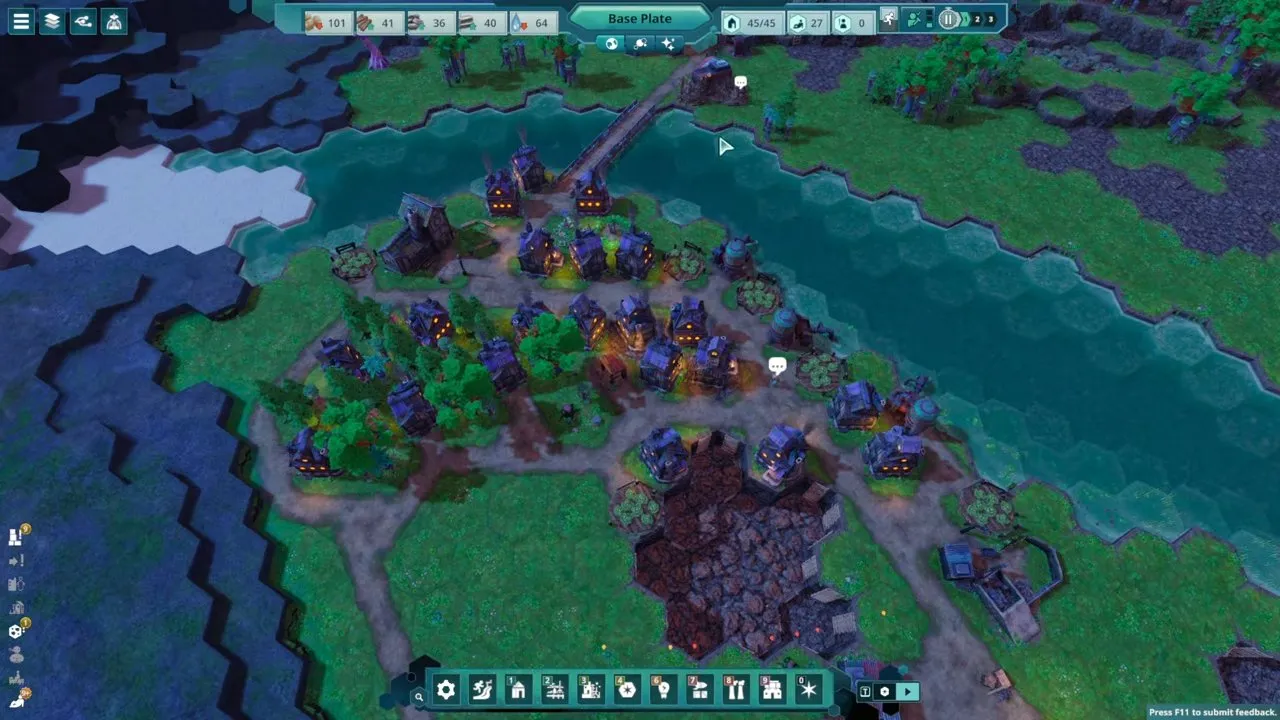
- Connect buildings to roads so Peeps can construct and operate them. Hold LEFT CTRL to position blueprints freely while planning, then provide the road connection they need.
- Select a house and check its blue housing range. Peeps only accept jobs inside their home's range, so a distant workplace can be unreachable even when you have people available.
- Check positive and negative Adjacency Effects before placing each building. Buildings at different terrain levels do not count toward adjacency.
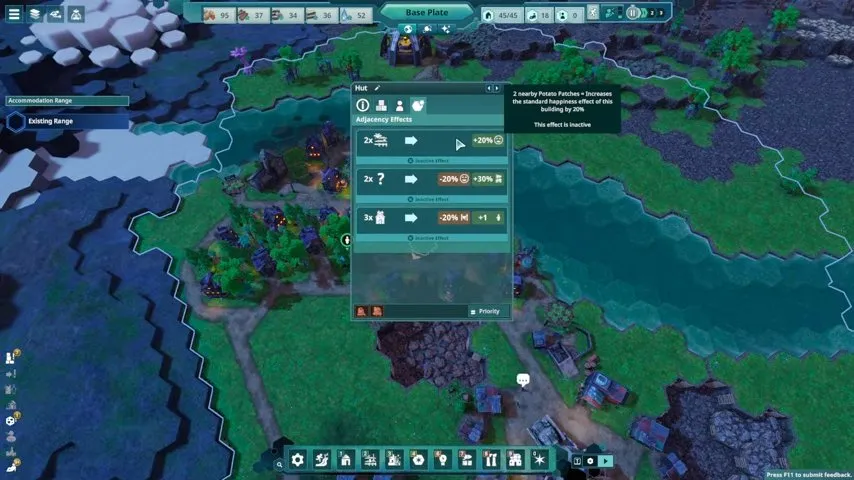
Don't force a perfect layout immediately. When a placement causes trouble, select the building and use its move control to improve the arrangement.
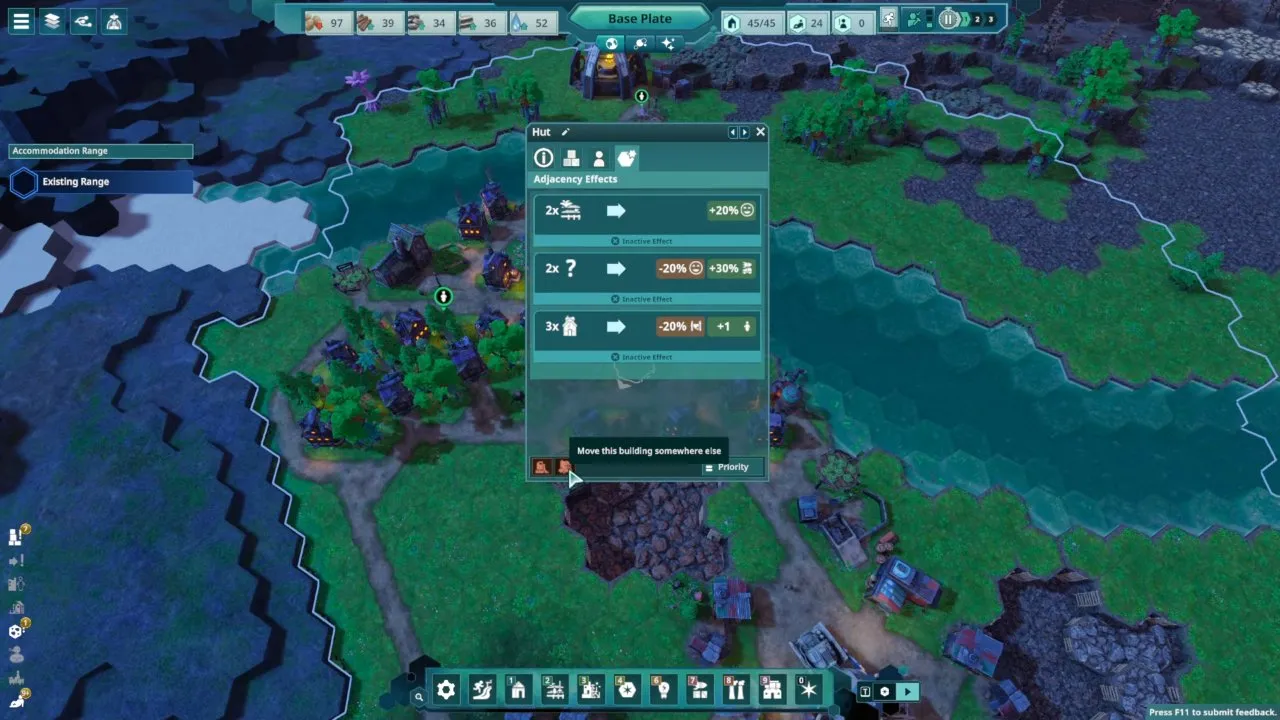
Relocation still takes workers to carry resources, so improve the layout gradually rather than tying up your hauling labor with a large reshuffle. A Research Facility cannot be moved while it is researching. As you reach more distant resources, build another small settlement with its own nearby housing and needs.
Why do buildings lack workers or stop producing?
Check housing range and empty job slots first: production buildings need every work slot filled before they can operate. Your Home Spaceship starts with 30 Peeps, so adding buildings faster than you can staff them can leave several production lines idle.
Open Location Summary to inspect resource flow, Peep condition, and buildings, then check the Alerts Bar for warnings. Diagnose the shortage before placing another producer.
| What you find | What to do |
|---|---|
| Empty work slots | Check housing range and whether your population can fill the jobs. |
| A full by-product output | Consume the by-product so the building can run again. |
| Materials diverted into something you don't need | Pause that building and preserve inputs for essential production. |
| A building with a power icon | Check its connection to a power source through neighboring buildings or Power Lines. |
A Storage Shed holds four resource types, 20 units each. Put sheds near the buildings that produce or consume those resources to keep hauling distances short. More storage alone won't solve every stoppage: an Ore Smelter produces Iron and Soot, and full Soot storage stops it even when Iron still has room.
For a material bottleneck, follow the input and by-product relationships in Beyond These Stars resources. If the missing piece is electricity, check how to connect power in Beyond These Stars.
Check the Burner's selected fuel before expanding production. Switching between wood waste and wood can help a resource shortage, depending on which material your city needs to preserve.
How do you keep Peeps fed, rested, and working?
Supply both food and drink after every shift, and keep them close to housing. Peeps also need time to relax; getting only food or only drink restores half as much Energy and provides less Happiness.
Keep Default work behavior while you stabilize those needs. Longer or harder shifts increase the recovery burden:
| Work behavior | Energy cost per shift | Effect |
|---|---|---|
| Default | 180 | Normal work behavior. |
| Overtime | 240 | Adults work the entire shift unless injured and ignore temperature breaks. |
| Hard Labor | 360 | Overtime effects plus a 30% boost to movement and building operation. |
Temperature and polluted or toxic tiles can add further Energy costs. Hard Labor is a poor answer to a town that already struggles to feed and hydrate its workers.
When available, a Farmhouse can grow three crops at once and is more efficient than individual Potato Patches. For population growth, homes need empty Peep Slots and must be within a School's range. Match that growth to the jobs you actually need.
If more than 40% of your Peeps fall below the Happiness threshold, they can strike for 3–7 shifts. Open Goals and meet their demands to end the strike, while addressing the food, drink, housing, or pollution problems behind it.
How do you unlock technology without destabilizing the city?
Open the Technology Tree, inspect the next technology's prerequisites, and work toward those requirements while keeping essential production staffed. Progress comes from meeting the conditions, so check the next target before spending your labor on unrelated expansion.
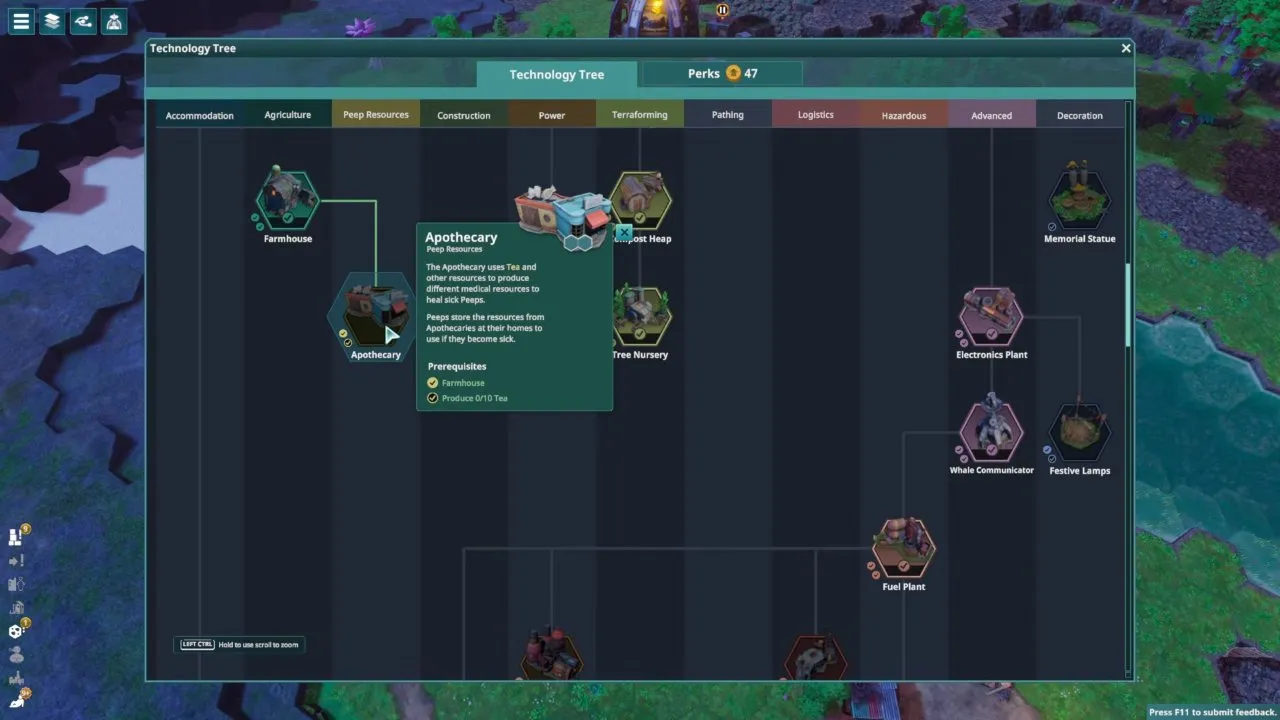
Unlocking technologies also grants Perk Points. Spend them in the Perks tab on improvements relevant to your current problems, such as pollution or exhaustion. Treat the next prerequisite as a focused goal, rather than trying to grow every production chain at once.
How do you expand without poisoning Kewa?
Bring water to new ground, compost it, and plant trees while controlling industrial pollution. This expands habitable atmosphere and helps you grow without sacrificing the biome your town depends on.
- Extend water into the area you want to develop.
- Compost bare ground to prepare it for plant life.
- Plant saplings to expand the atmosphere, with forests near industry where they can absorb pollution.
Forests slowly absorb pollution within 4 tiles. They help, but a tile kept at High or Very High Pollution for 15 minutes becomes a Toxic Area, where Peeps refuse to work or gather resources. Keep Cleaners on polluted tiles before they turn toxic and use Toxic Tile Scrapers on ground that already has, and raise cleaning-building priority when pollution needs urgent attention.
Plan the terrain work with Beyond These Stars terraforming, and handle industrial buildup with Beyond These Stars pollution.
Check Kewa's Health, Happiness, and temperature on the Galaxy Map as your town grows. Poor wellbeing can trigger an unplanned journey, and overheating can make Kewa move somewhere cooler. Discovering a planet doesn't require an immediate landing: you can prepare and return later, especially when replacing finite resources will take more work.
With nearby jobs, reliable meals and drinks, clear outputs, and pollution under control, you have a foundation for steady expansion. Next, learn how Beyond These Stars Kewa responds to your settlement so your growing city and its living home stay healthy together.